

Professor Claire Jowitt
Centre Director
Centre Management Board
Claire Jowitt is Professor of Renaissance Studies and Director of the Shipwrecks and Maritime Heritage Research Centre at the University of East Anglia. She has published widely on maritime history and culture. Since 2019 she has led historical research on The Gloucester Project (https://www.gloucestershipwreck.co.uk/) supported by The Leverhulme Trust, and she is a trustee of The Gloucester 1682 Trust. She co-curated ‘The Last Voyage of the Gloucester: Norfolk’s Royal Shipwreck, 1682’ exhibition (2023) and was awarded Freedom of the City of London in 2024 in recognition of her work on the Gloucester. In 2026 she was elected as Chair of the Society of Nautical Research.
Peter Sheehan is interested in the physics and circulation of shelf seas, the shallow parts of the ocean that surround our continents. Be it modulating ice melt in Antarctica or absorbing carbon off the coast of northern Europe, what happens in these waters has a direct impact on our climate. He uses a variety of platforms, from ships to autonomous ocean gliders, to take the measurements needed to better understand shelf sea environments around the world: how currents circulate around them, how they transport heat and tracers, and how they respond to climate change.

Centre Deputy-Director and research theme lead for Environmental, Marine, and Climate Science
Dr Peter Sheehan

David Baker
Research theme lead for Genetic Analysis, Biochemistry, and Ancient DNA
Dave Baker is Head of Sequencing at the Quadram Institute in Norwich, UK, with over 30 years of experience in DNA sequencing, genomics, and laboratory leadership. He leads sequencing operations supporting research across microbiology, microbiomes, clinical science, food, environmental, and agricultural research. His expertise spans major sequencing technologies, including Illumina, PacBio, and Oxford Nanopore, alongside the development and implementation of innovative, high-throughput genomic workflows. Dave has held senior technical roles at leading UK research institutions, including the Earlham Institute and John Innes Centre. He has contributed to large-scale national and international research programmes, including genomic surveillance of SARS-CoV-2, and has co-authored more than 100 scientific publications. His work focuses on enabling researchers to apply advanced sequencing technologies to address challenges in health, agriculture, microbiology, and the environment.
Sue Coleman is a graduate of UEA, having studied Biochemistry as an undergraduate, a PhD in plant molecular biology and an MBA. In a varied career, both before and after her studies, she has worked for large and small companies, all based in and around Norwich. She is currently an Intellectual Property Officer at UEA, with a broad portfolio of projects across all schools. Although she studied STEM subjects, Sue enjoys the challenge of working across disciplines and is excited to see how science can be applied to maritime heritage, both here in Norfolk and across the world, and how the study of shipwrecks can reveal the detail in how people live, work and trade.

Sue Coleman
Intellectual Property Officer

Justine Mann
Cultural Funding Officer
Justine Mann is Strategic Cultural Funding Manager at the University of East Anglia (UEA), where she leads cultural fundraising and partnership development and coordinates UEA's relationship with Arts Council England and the National Lottery Heritage Fund. Following a career in London as a librarian and archivist in the civil service and third sector, she returned to Norfolk to complete an MA in Creative Writing (Prose Fiction) at UEA and later established the British Archive for Contemporary Writing (BACW). As BACW Archivist, she spent nine years working closely with academics, artists and cultural partners to deliver a range of funded, community-focused cultural projects that connected research, heritage and creativity. Justine also currently serves as a Literary Trustee of the Doris Lessing Trust.
John Pinnegar is Principal Scientist and Lead Advisor for marine climate change at the Centre for Environment, Fisheries & Aquaculture Science (Cefas). He is also the Director of the Collaborative Centre for Sustainable Use of the Seas (CCSUS), a strategic initiative between the University of East Anglia and Cefas, and the International Marine Climate Change Centre (iMC3) at Cefas. His research interests include long-term changes in marine ecosystems, the impacts of future climate change and ocean acidification on marine animal populations, as well as marine food-webs and fisheries modelling. He has a particular interest in the development of socio-political scenarios for the oceans as well as public understanding of maritime climate change issues. John has worked all around the world including, most recently in a number of Caribbean and Indian Ocean Small Island Developing States (SIDS).

Professor John Pinnegar
Director of Cefas and member of research theme: Environmental, Marine, and Climate Science
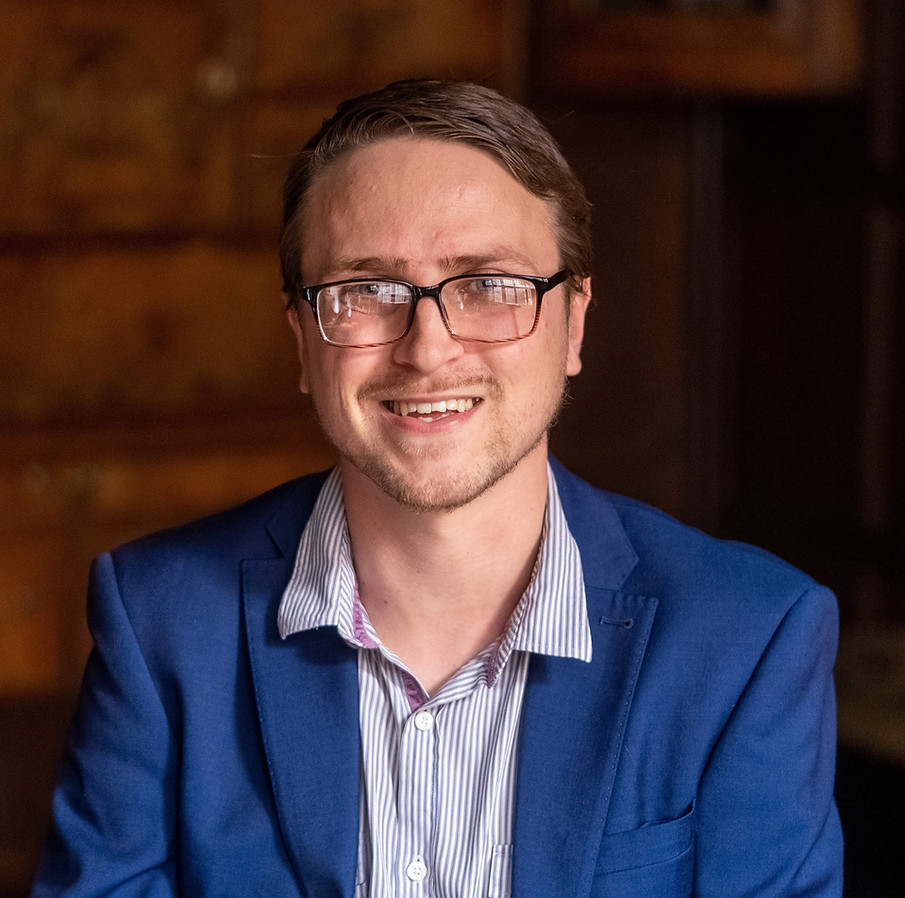
Dr Benjamin Redding
Digital Communications Officer and member of research themes: Maritime History, Heritage, and Story Telling; Environmental, Marine, and Climate Science
Benjamin Redding is Lecturer in Early Modern History at the University of East Anglia and a maritime historian. His first book was The English and French Navies: 1500–1650: Expansion, Organisation and State-Building (Boydell & Brewer, 2022). As Senior Research Associate on The Gloucester Project (https://www.gloucestershipwreck.co.uk) since 2020, his work has been supported by The Leverhulme Trust, Arts and Humanities Research Council, and British Academy. He co-curated ‘The Last Voyage of the Gloucester: Norfolk’s Royal Shipwreck, 1682’ exhibition at Norwich Castle Museum & Art Gallery in 2023. He is currently co-leading a National Lottery Heritage Fund project to develop augmented maritime heritage walks in Great Yarmouth. He sits on several research and heritage committees including as trustee of The British Commission for Maritime History and council member of The Navy Records Society.
Sarah Wade is an art historian and Associate Professor in Museum Studies at University of East Anglia, UK. Her research focuses on human-animal relations, the oceans and ecological breakdown in contemporary art, exhibitions and museum display. She has published widely on both wildlife conservation and ocean ecology in artistic and curatorial practice and is co-founder of the ‘Curating the Sea’ research project, which has resulted in a special issue of the Journal of Curatorial Studies (2020), Oceans: Documents of Contemporary Art (MIT Press/Whitechapel Gallery, 2023), the exhibition Sea Inside (Sainsbury Centre, UK, 2025) and numerous ocean-themed research and public engagement events with artists, curators and museum practitioners internationally. Sarah holds a PhD in the History of Art from UCL and over the years has worked with various museums and heritage organisations in research, project management and curatorial capacities. She continues to collaborate with museum colleagues on research projects and exhibitions.

Dr Sarah Wade
Member of research theme: Maritime History, Heritage, and Story Telling

Professor Steve Waters
Member of research theme: Maritime History, Heritage, and Story Telling
Steve Waters is Professor of Scriptwriting at UEA; his plays include Limehouse (2017) and Temple (2015) for the Donmar Warehouse, and his version of Brecht's The Caucasian Chalk Circle for the Rose Theatre, 2022, as well as the revival of his double bill of plays first seen at The Bush Theatre in London The Contingency Plan (2009) at Sheffield Crucible Theatre in 2022; and Little Platoons (2011), also for The Bush Theatre.
Steve's work for radio includes the acclaimed series Good People (2026) and Song of the Reed (2021/2) for BBC Radio 4, Miriam and Youssef (2020) and Fall of the Shah (2019) for BBC World Service. His books include A Life in 16 Films: How Cinema Made me a Playwright (Methuen, 2021) and The Secret Life of Plays (Nick Hern, 2010). He was the recipient of an AHRC Leadership Fellowship Grant in 2020 'Song of the Reed: Dramatising Conservation'. He is delighted to be a member of the Centre, having written the script for an animated film dramatising the fate of the Gloucester's last voyage for the 2023 exhibition at Norwich Castle.